

Few Indian films have arrived with the weight of expectation that Ramayana: Rise Of A Legend carries into theatres this Diwali. Nitesh Tiwari of Dangal fame directed it, and Namit Malhotra’s Prime Focus Studios produced it, with DNEG handling the visual effects. It is the first half of a two-part retelling of the epic, with Part 2 slated for Diwali 2028. No Indian movie has ever been showcased to the global audience the way Ramayana has been. They got Sony Pictures on board to handle international distribution and also have IMAX screens worldwide.
We have a reported $500m budget ($250m for each part), a stacked star cast and perhaps the most important story in all of Indian mythology. It is easily the most ambitious Indian films ever attempted, and the scale and grandeur are impossible to miss. But the makers clearly prioritized scale over script, and the result is a film that dazzles in individual frames while the storytelling struggles to keep up. Ramayana often feels like a magnificent palace built on a shaky foundation: the walls are impressive, but you keep wondering what is holding them up.
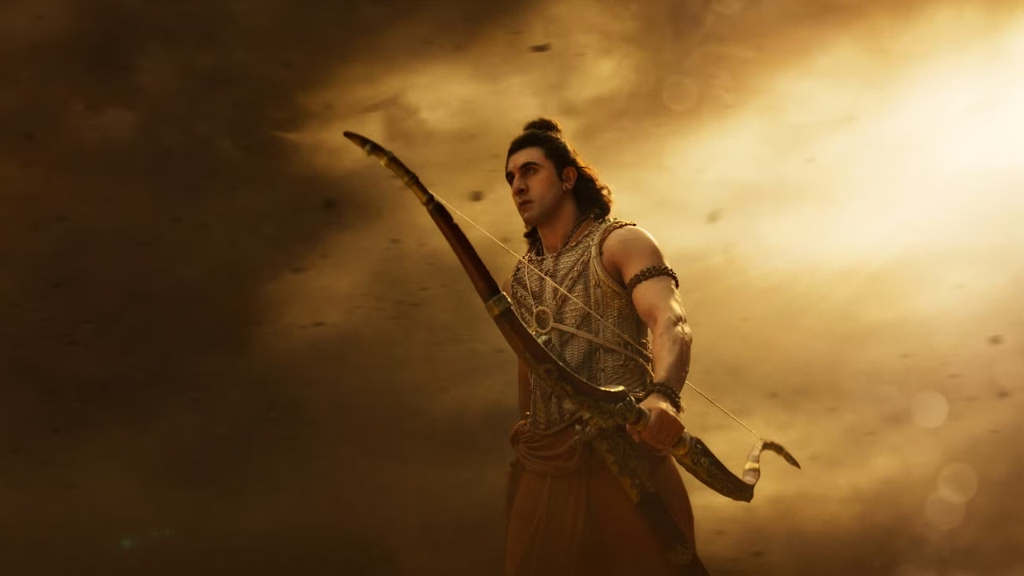
The performances are the first place the cracks show. Yash stands out among the cast as a menacing Ravana, and his look is striking, but the acting is mediocre across the board, and most characters are, in a sense, one-dimensional. Ranbir Kapoor fits Ram and brings innocence and purity, but he only comes fully alive in the very end, and Ram could have been far more emotionally impactful. Ravi Dubey’s Lakshman has zero effect, and his comic relief angle doesn’t land at all. I can’t tell whether the fault lies with the writing, Dubey, or a bit of both. I also wish Sai Pallavi and Yash had dubbed for themselves. They didn’t, and the mismatch is distracting at times.
On the technical front, the sets and costumes are phenomenal, with one notable exception. Sai Pallavi’s costumes feel uninspiring, which is a real problem when Sita’s beauty is so central to the story. The VFX is inconsistent and, frankly, underwhelming. The reported budget is humongous, but that money is hard to find on screen. It is like being promised a premium tasting menu and being served a decent buffet. We have seen how good DNEG can be, and with Ramayana being their own production, I had hoped they would go the extra mile and surpass their past work. That is not the case, especially with the Asura designs.

The film also suffers from too many cooks in the kitchen. For example, we have two cinematographers, two action directors, and two music directors etc., and you can feel clashing styles in certain frames, as if several films are fighting for control of one canvas. Hans Zimmer is nowhere near his best level here, and A. R. Rahman delivers a very underwhelming album. The editing is clunky and pulls you out of the experience quite often. There are plenty of stunning shots sprinkled throughout, and they definitely elevate the spectacle.
The screenplay is where Ramayana finally buckles. For a 200-minute runtime, the supporting characters get very little development, and the pacing drags through most of it. It should have been at least 30 minutes shorter. The dialogue is predictable, the elevation moments lack punch, and the mid-credit scene feels lazy. The climactic action sequence is a genuine highlight and lets the film end on a high, but it arrives after a long stretch of waiting.
There is a lot to appreciate in Ramayana: Rise of a Legend, especially the ambition and the intention. But the screenplay is average at best, and the result is a disappointing first chapter for a film with this much money and promise. The latter half of this story has always been the more exciting one, especially with the entry of a beloved character and as it is more clash-oriented, and the hope is that Part 2 can improve with all those tools to play with. For now, this one is certainly worth a watch in IMAX for the spectacle, but with mild expectations on the storytelling side.


