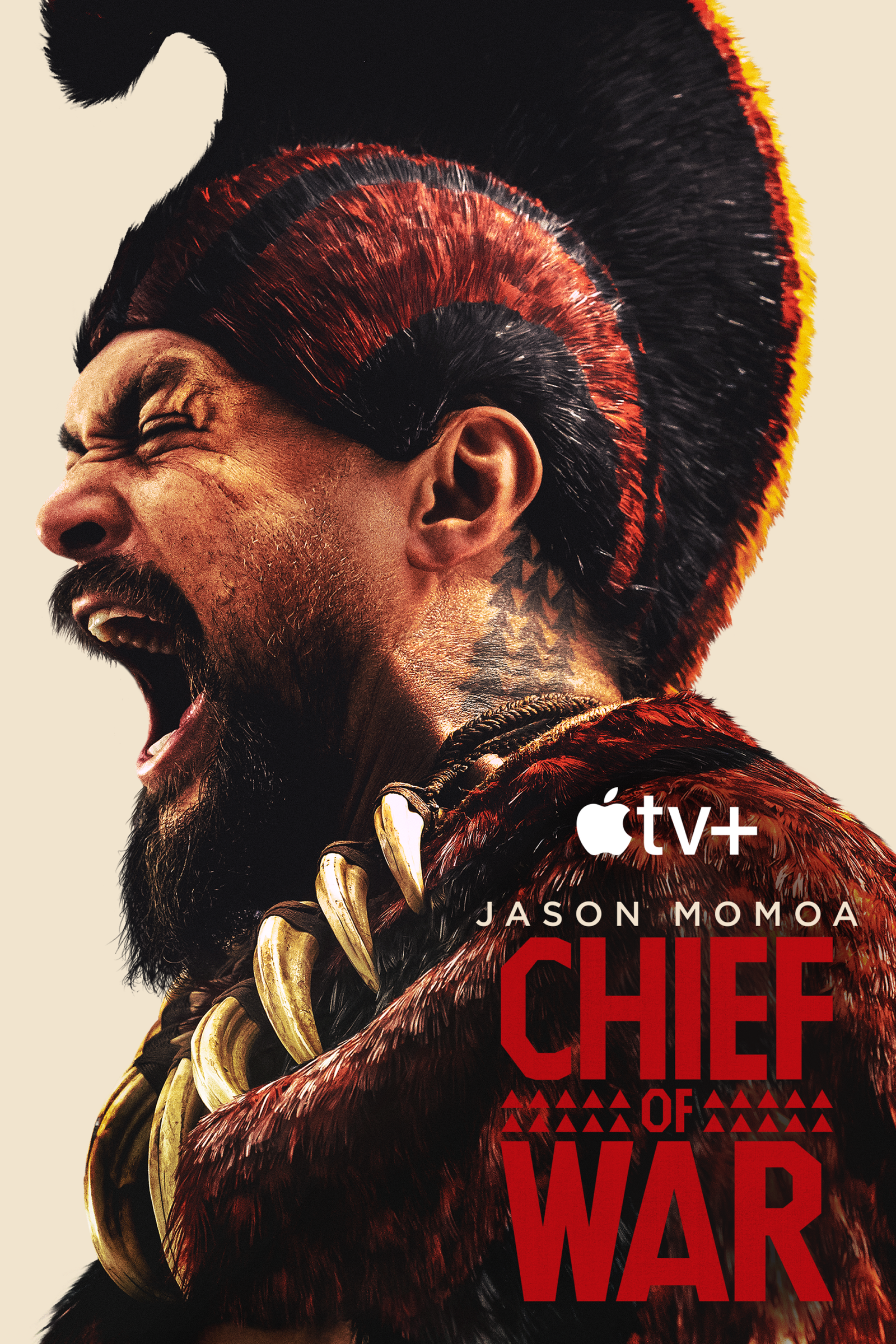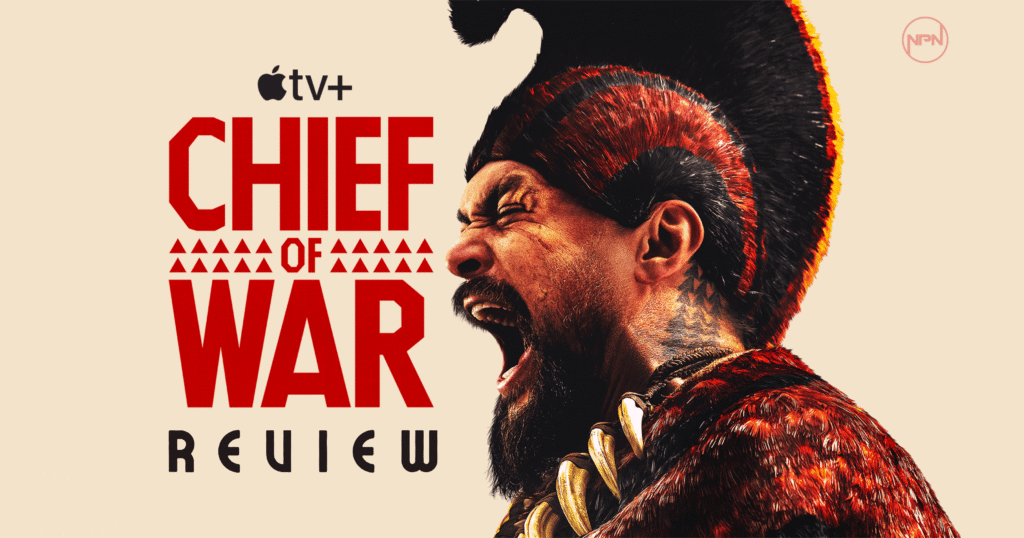
AppleTV’s Chief of War arrives with the promise of being an epic, action-heavy historical series, but what it delivers is a slower, more character-focused drama, anchored by Jason Momoa in a role that feels tailor-made for him. Momoa plays Ka‘iana, a historical Hawaiian figure caught between worlds, and his commanding presence, along with his Hawaiian heritage, makes him the ideal choice not just to lead the show, but to help mount it. He not only starred in, but also co-created and co-wrote the series.
Though heavily marketed as a large-scale war epic, Chief of War leans more into drama than action. Much of the storytelling is built on personal conflicts, loyalty, and identity, with the backdrop of colonial tension simmering throughout. The opening scene, featuring Ka‘iana in a shark-infested sequence, immediately recalls Momoa’s Aquaman, and in many ways, the character feels like a grounded blend of Aquaman and Khal Drogo.
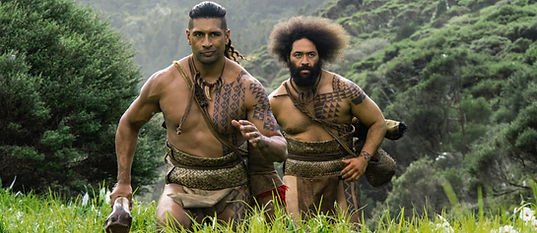
The series deserves credit for its deep cultural respect. Most of the cast are Hawaiian, and the first two episodes are spoken entirely in the Hawaiian language, which is a bold, admirable choice that helps root the viewer in this world. The language continues to weave through the show even after English becomes more dominant and at time may feel convenient, but it never feels forced. Add to that stunning natural locations, lush production design, and fantastic hair and makeup work, and Chief of War creates an atmosphere that feels alive and genuinely Hawaiian.
Performance-wise, Momoa sticks to his usual strengths for the most part — stoic glances, physical dominance, and brooding charisma — but he does rise to the occasion in the final stretch, delivering some powerful emotional moments that hint at what he could do with more layered material. Temeura Morrison, usually a scene-stealer, is unfortunately stuck with a fairly one-dimensional villain, while Te Ao o Hinepehinga as Kupuohi adds some welcome emotional conflict. Lucianne Buchanan as Ka‘ahumanu, however, is the true standout. She delivers her career-best performance, bringing complexity and nuance to her very integral role.
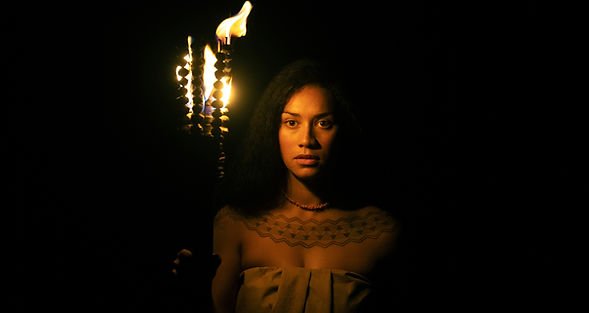
In terms of production, the series is solid. The score is immersive without being overbearing, and the pacing, while mostly consistent, does sag in parts. At nine episodes, it arguably could’ve been trimmed down by two to keep things tighter. The show holds back on action for a good while, which may disappoint some viewers, but when it does arrive — particularly in the finale — it’s brutal, bloody, and beautifully executed. The last episode is easily the series’ best, offering the kind of visual flair and cathartic payoff that had been building throughout.
Chief of War is a respectful tribute to Hawaiian history and a solid platform that expands Momoa’s talents. It doesn’t break new ground, and it plays things relatively safe in terms of narrative complexity, but it’s sincere, effective, and visually compelling. It keeps you engaged enough and there’s certainly a lot more story left to explore.