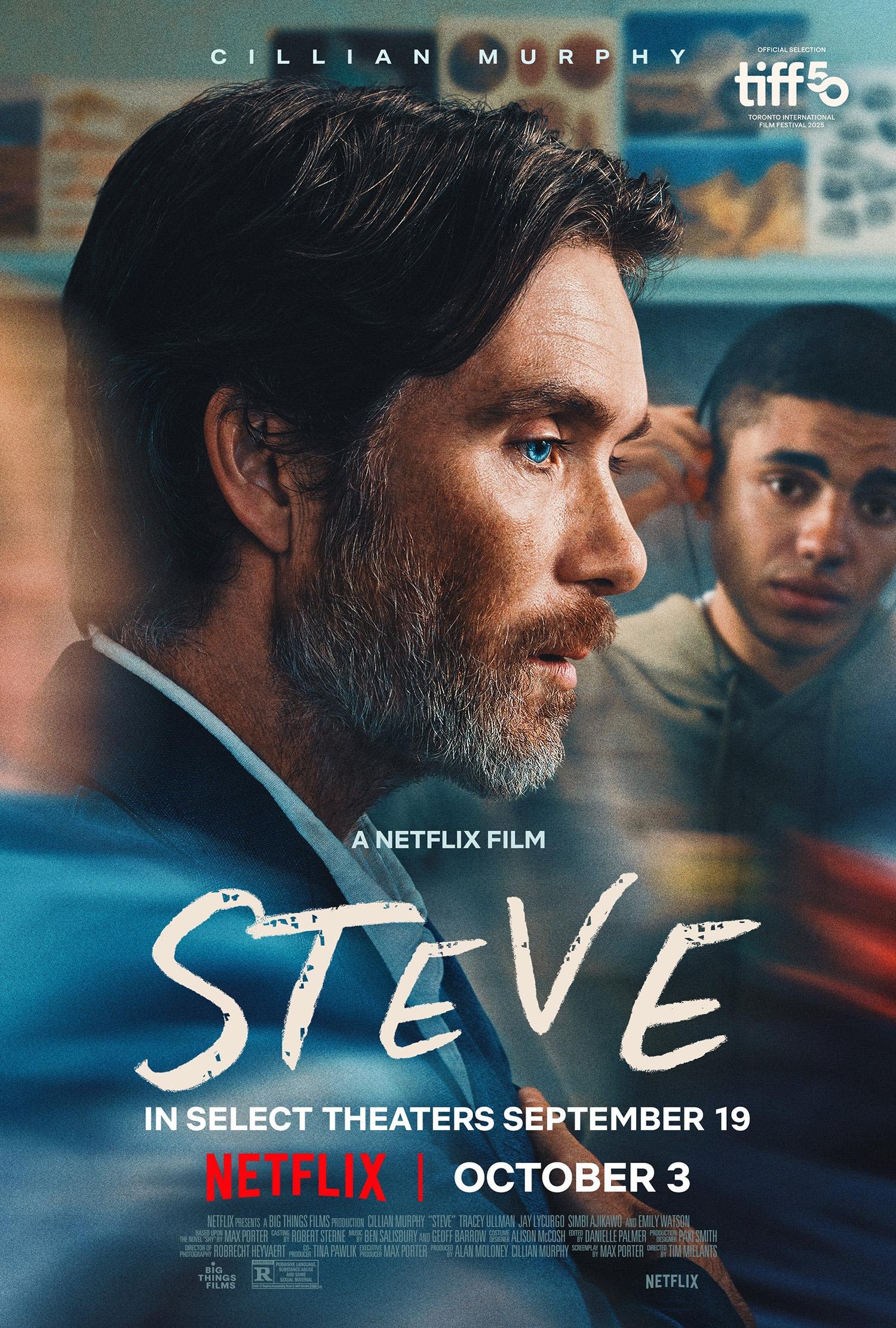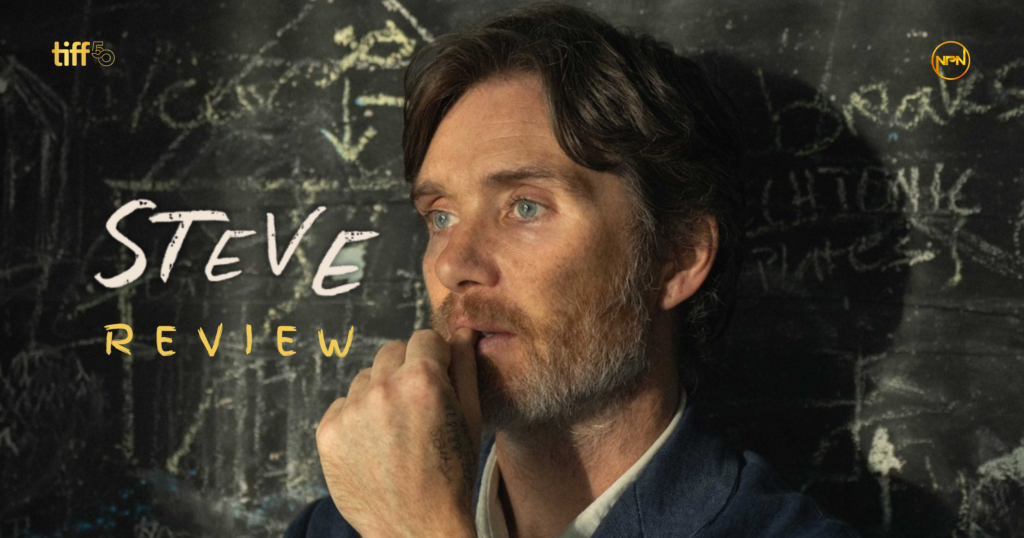
High from the Oscar win for Oppenheimer, all eyes were on Cillian Murphy to see what he does next. Many, including me, were surprised when he chose Steve as his next project, as it seemed like an unconventional choice on paper. In Steve, director Tim Mielants and writer Max Porter bring to screen a sharply focused day in the life of a stressed, dedicated headteacher at a rundown reform school. Cillian Murphy plays the fraught title character with raw intensity—one of his most chaotic, verbal, and immoderate performances to date—anchoring a film that pulses with emotional volatility and dark humor.
The story unfolds in a mid-1990s setting, where Steve battles to save the institution from closure while grappling with his mental health and substance use, a portrait of a “helpless helper” overwhelmed by the very system he’s trying to uphold. Murphy delivers arguably his loudest and most frenetic turn yet. He delivers his lines with sharp, restless urgency, yet roots the outbursts in a core of human fragility. He captures Steve’s exhaustion and aces every scene. Alongside him, the teen actors—especially Jay Lycurgo as Shy—bring conviction and depth.
Thematically, Steve pulses with emotional resonance—trauma, rejection, institutional decay, and the bonds between broken people trapped by circumstance all collide in a single, chaotic day, palpable dark humor throughout, particularly in the first act, yet as the film settles into quieter rhythms, it calmly yet forcefully conveys the weight of its themes. That shift allows the energy to build toward moments of bleak honesty and fleeting hope.
Technically, the film’s strengths lie in its editing and overall energy. Despite being filmed entirely on a single school campus, the direction and cutting give it propulsive momentum, with dynamism that belies its limited scope. Editing emerges as a highlight—sharp, rhythmic, and effective in amplifying both emotion and humor. Visually, however, there were some excessive stylistic choices, including sweeping drones, that occasionally feel distracting or over-directed, detracting from the raw immediacy of the material.
Emily Watson, Tracey Ullman, and Simbi Ajikawo round out the adult ensemble. Watson in particular is underused, and her arc is surprisingly limited in a film brimming with psychological complexity. The supporting adults, while solid, didn’t have too much meat in their characters. Still, the empathetic writing and strong ensemble help the audience connect with nearly every character—even amid the chaos and institutional dysfunction.
Steve is a flawed but compelling exploration of identity, empathy, and belonging. At a crisp 92 minutes, it is tight and energetic. It may not be Tim Mielants’ best effort, nor represent Cillian Murphy at his absolute peak, but the emotional truth he and the cast bring ensures it’s more than a decent watch. Ultimately, it’s a film that grabs you, shakes you, and makes you feel deeply.