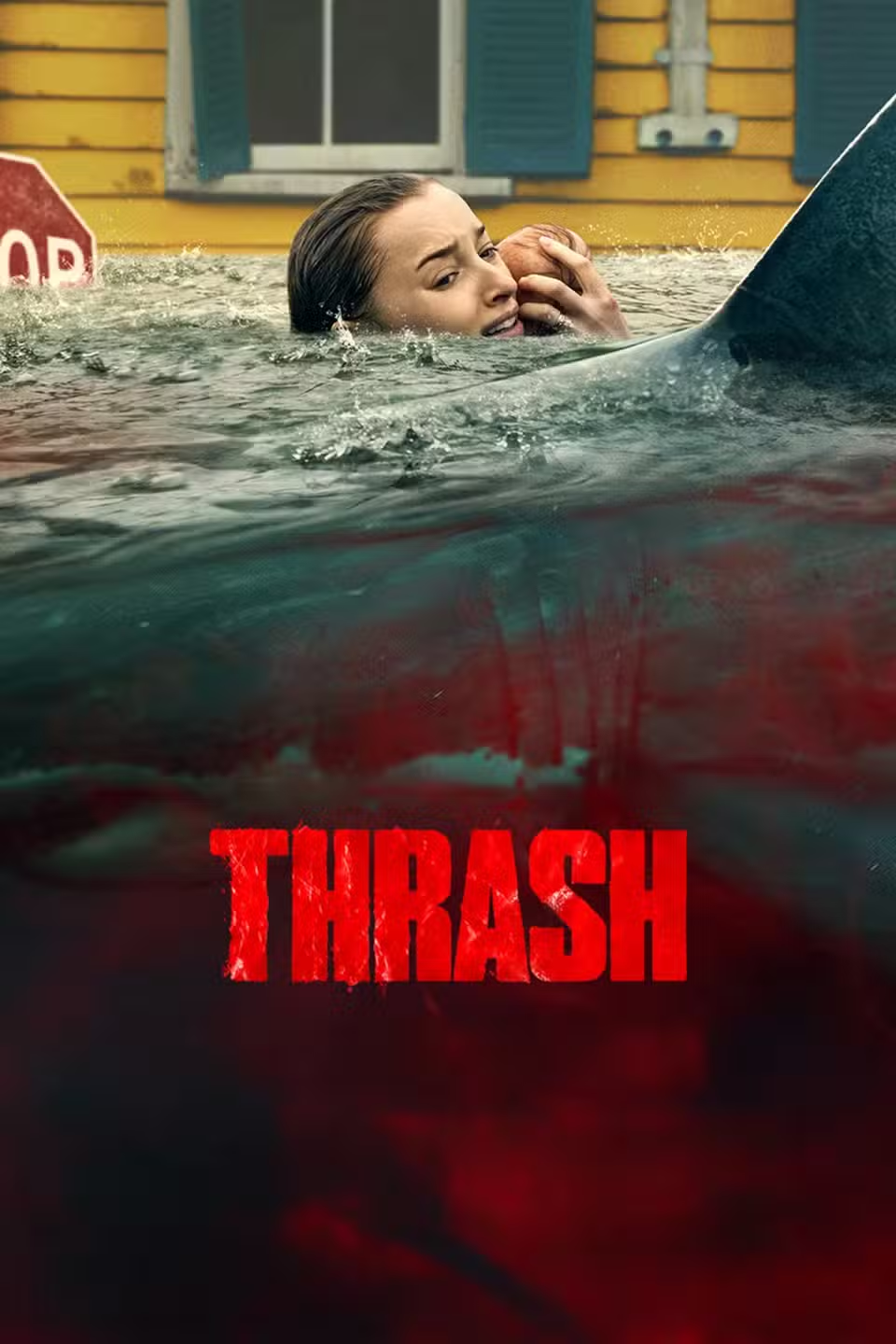
Netflix’s Thrash throws its characters into a high-concept nightmare: a Category 5 hurricane floods a coastal town, unleashing a pack of aggressive bull sharks into the streets. Directed by Tommy Wirkola, the film has all the ingredients of an effective creature-feature thriller — but struggles to make its characters compelling enough to anchor the chaos.
At the center of the story is Lisa (Phoebe Dynevor), a heavily pregnant woman abandoned by her fiancé and forced to navigate both imminent childbirth and a life-threatening disaster. On paper, she’s positioned as the emotional core of the film — someone with everything to lose. However, the script rarely gives her the space to feel like a fully realized person. Her reactions to danger often feel muted, and even major turning points in her journey lack the emotional weight they should carry.
She is paired with Dakota (Whitney Peak), a young woman struggling with severe anxiety after personal loss. Dakota has the makings of one of the film’s most interesting characters: her agoraphobia creates a built-in internal conflict that mirrors the external chaos. Yet, much like Lisa, she is underwritten. Her anxiety is treated more as a plot device than a character trait, limiting her ability to form meaningful connections — even in moments that should naturally bring the two women closer together.

Their dynamic is particularly frustrating because the film sets up the perfect conditions for a powerful bond. A high-stakes rescue, shared trauma, and constant proximity should build tension and emotional payoff. Instead, their relationship remains largely functional, driven by survival logistics rather than genuine human connection. Conversations rarely move beyond exposition, and key emotional beats feel rushed or absent.
Outside of the central duo, the film introduces several supporting characters who feel like they should add texture to the story but rarely evolve beyond their setups. The most prominent are the foster siblings — Ron (Stacy Clausen), Dee (Alyla Browne), and Will (Dante Ubaldi) — who are trapped in a house in the swamp with their neglectful and volatile foster father, Billy (Matt Nable). Their situation is immediately compelling: three kids stuck with a man who underestimates the storm and puts them in danger. Yet, despite this strong foundation, the film barely explores who they are as individuals.
Similarly, Dale (Djimon Hounsou), a marine researcher and Dakota’s uncle, feels like he should bring both urgency and emotional grounding to the story, but the script keeps him at a distance. Despite his connection to Dakota and his understanding of the threat, he’s given little room to develop beyond the basics, leaving his presence functional rather than memorable.

This scattered approach results in a narrative that feels overcrowded yet emotionally thin. Instead of deepening a few key arcs, Thrash spreads its attention across multiple storylines, leaving most characters feeling interchangeable. As a result, the stakes never fully land, as the audience has little reason to care who survives.
Ironically, this is where the film misses what makes the best creature features work. The threat — in this case, the sharks — is only as effective as the emotional stakes surrounding it. Without strong character development, even the most intense scenarios lose their impact.
That said, Thrash isn’t without its appeal. Wirkola leans into bursts of violence and humor that keep the film engaging on a surface level. The pacing is brisk, and the high-concept premise alone is enough to carry casual viewers through its runtime.
Ultimately, Thrash feels like a film that understands its genre but underestimates the importance of its characters. It delivers spectacle and chaos, but without the emotional foundation needed to elevate it beyond disposable entertainment. A watchable but uneven shark thriller, Thrash proves that even in a storm full of monsters, it’s the human element that matters most — and here, it’s the weakest link.